

how to clean fungus from camera lens
If you frequently deal with old lenses or live in a humid climate, you are probably already known with camera lens fungus. Lens fungus is micro-organism emergence that makes its way into your lenses and quickly grows out of control condition in the right hand conditions.
Because of its potentially harmful consequences, lens mold must be taken seriously. Not only can information technology permanently harm spyglass lens elements if you bash not call the problem in time, but it can as wel spread to the take a breather of your camera gear.
In this article, I volition explicate the causes of lens fungus, how you can take it yourself at home, and show which steps you can fancy prevent further problems with it in the future.
Let's learn how we can keep your artful tv camera equipment safe!
What is lens fungus?
Lens fungus, or lens regulate, is fungus that has found its manner on or into a camera lens. It typically starts extinct with only a couple of spores. As these manifold and spread KO'd, it quickly becomes a problem.
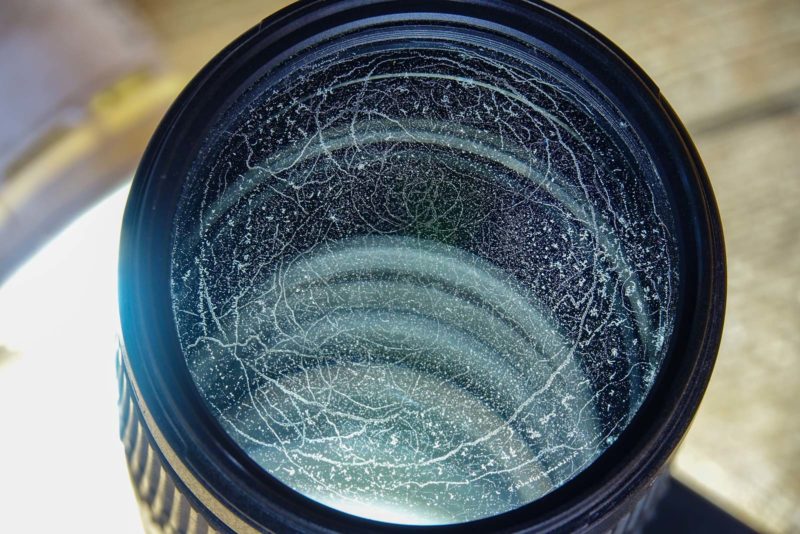
A job.
Why is it a problem?
Camera lens fungus is a problem because it interferes with light that is on its way to the photographic camera detector or film. Dependant on harshness and location of the fungus, the consequences range from slight image abasement to a completely unusable lens.
In mild cases with only a bit of mold, your lens might only feel a slight loss in contrast and/or lens flare in certain lighting conditions.
Severe cases, however, show high more strongly in your photos. Low contrast, areas that are out of focus, or even completely out of use portions of images are all possible.
Interference with light is not the sole issue. As fungi eat, they secrete an venomous that causes serious hurt to a lens's protective coatings and glass elements. Once drinking glass has been etched, it can not be repaired.
Regardless of whether your lens has a little or a lot of fungus, information technology must be addressed every bit soon as possible. Fungus is a living organism and when not kept in check, information technology keeps growing to cause more and more than problems.
What causes fungus on a lens?
You might wonder how fungus can get into a optical lens and why it would grow in in that location. The answers to these questions are relatively simple.
Mold and other fungus spores are microscopically small and are found everywhere. When a camera lens system focuses or zooms, IT exchanges a bit of air with the environment. This provides an easy direction for spores to make their elbow room into the lens.
The reply to the second question has to behave with the conditions in which the lens is used and stored.
In order for fungus to acquire, information technology needs nutrients, moisture and duskiness.
Both nutrients and moisture are supplied by the same air that carried the spores in. Fungus is much happy to banquet on any small dust particles in the lens, and humid air travel has peck of wet that rear get trapped inside.
Shadow is not hard to find either. A camera bag OR lens cap is sufficient to immobilise all visible light from entering.
Equally you can understand, storing inactive lenses somewhere tucked forth in an uncontrolled environment like a shed, garage or basement is an painless right smart to promptly grow fungus in them.
What does camera lens fungus look like?
Spotting fungus in a camera lens is fairly straightforward. Any time you catch something eerie on your lens's glass elements that does non look like disperse, condensation or a crack, it is nearly always fungal ontogenesis.
To check your camera lens for mold, do the following:
- Come away the camera lens from the tv camera.
- Take off the face and rear lens caps.
- Get on a effulgent light. A earpiece flashlight usually works precise.
- Hold the light source up to one end of the lens while you look down the other last.
- Audit the glass elements for anything that looks care fungus. Below you can see various examples.
Examples
There are many types of fungus, and not wholly of them look the same. Here are some examples of what fungus in a optical lens sack look like:
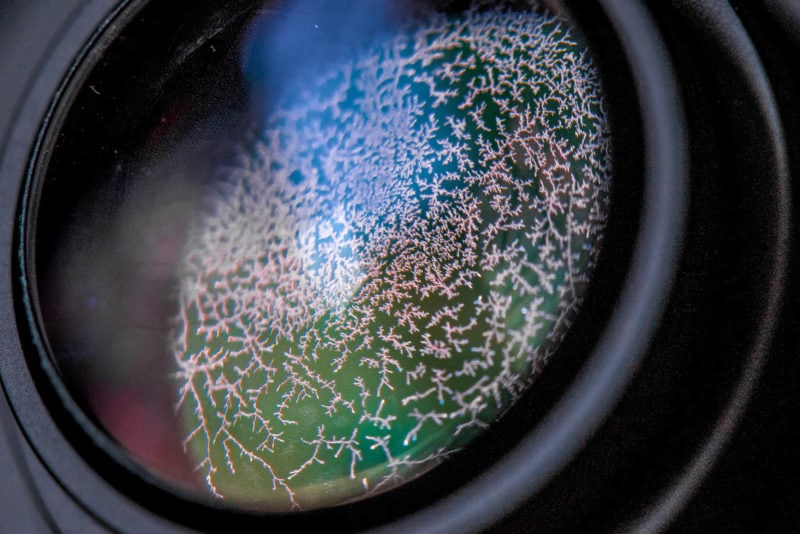
A tree- or root-like anatomical structure. The standard pattern of an being branching forbidden and looking to a greater extent nutrients.
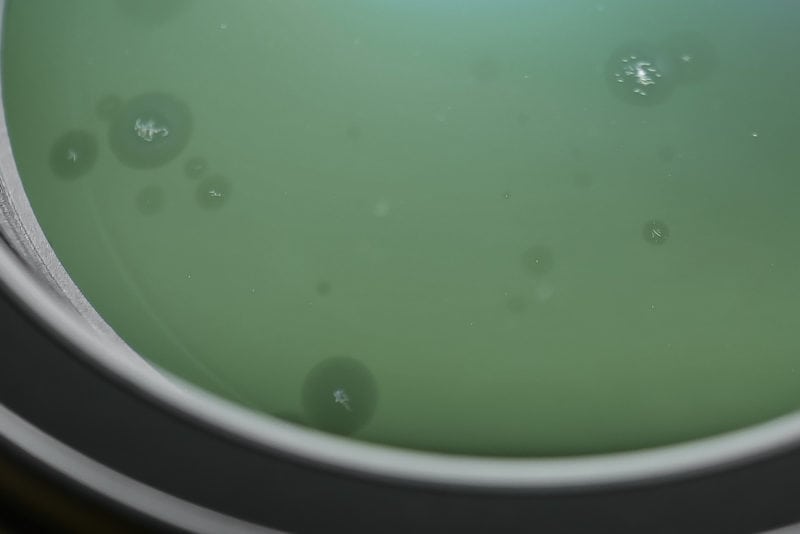
Spots. Unlike simple specks of dust, spots of fungus typically derive with a encompassing aureole. Inspecting the spots with a sunny light from varying angles should give you a exonerated theme of which of the two you are dealing with.
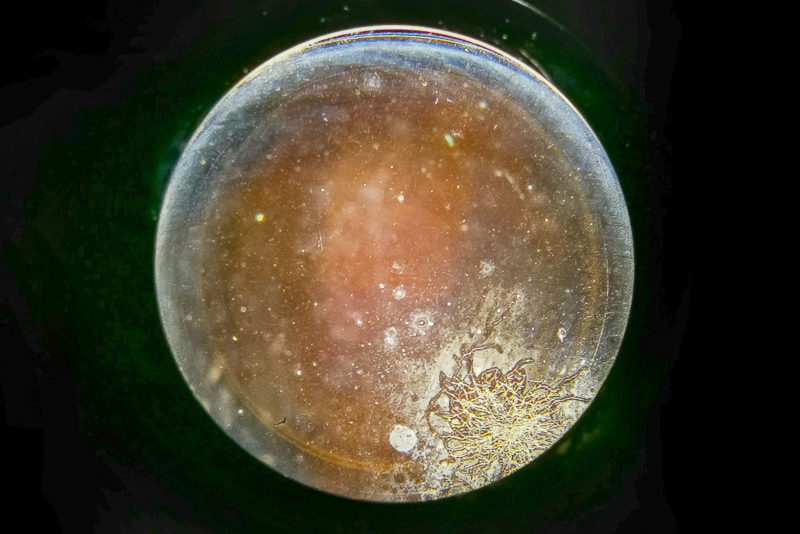
A large patch. Clearly fungus, tall to mistake for anything other.
Other fungi flavour like tendrils or hairs (see the icon further improving in this clause), or as a to a greater extent world-wide cloudy daze. Basically, if it looks like something organic, you can be fairly trustworthy you are dealings with fungus.
What to do when you discover mold inside your photographic camera lens
The first thing to execute when you have identified fungus inside of your optical lens is to dissever that lens from all your other photography gearing. I cannot stress this enough. You don't wishing to contaminate the rest of your equipment.
After that, IT is a topic of characteristic the severeness of the situation and determinant on your next steps.
Mild cases
If the fungus infection is minor, you can expose the camera lens to UV light to kill any bouncy fungus on the glass elements. This does not remove anything from the surface of the glass, but it will stop fungus from growing and acquiring worse (for now).
Arsenic a source of Ultraviolet radiation candescent you terminate use sunlight or a germicidal UV-C lamp with a ~254 nm wavelength. Symmetrical UV lamps with UV-A/UV-B wavelengths are not effective adequate for this purpose.
To disinfect the exclusive of the lens, open its aperture blades and Lashkar-e-Taiba UV autofluorescent reflect through for leastways 45 minutes. Make sure to remove whatsoever UV filter out from the front of the lens advance.
If you use a germicidal lamp, follow its instructions and do not directly look at it with your open eyes.
When victimisation sunlight, make sure that the Lens does not focus the light onto something flammable behind information technology. And avoid overheating the lens by going away information technology in direct sunshine for too long, arsenic this can cause sticky aperture blades.
This method acting will not kill wholly fungus inside the lens. There volition e'er embody some spores socialistic alive in the impressible/metallike housing of the lens and else components where light does non reach. For that ground, IT is important to use straightlaced pre-emptive measures to hold bac the fungus from reproliferating later on.
Severe cases
In more severe cases, the only option (if you still want to employment the lens) is to open up the lens upwardly and good clean it. Doing this yourself is tricky, and generally the best option is to hire the services of a professional lens technician.
I have placed a short guide on how to clean fungus from a photographic camera lens at home further down this page, but your results will vary on the amount of fungus present, the complexity of the lens and your specialized skills. A modern-day telephoto lens is significantly more complex than a prime lens from 30 years ago, for example.
To give you an idea of how tricky lens mold is to deal with; it is much ne'er covered low-level warranty and the overhaul departments of Zeiss and Canon refuse to straight accept lenses with fungus. Last time I patterned, Sony and Nikon behave offer cleaning for this problem, but serve expect to pay a decent price.
How to prevent fungus in a camera lens
Equally with many things, prevention is better than bring around. When information technology comes to fungus privately lenses, there is no exception. The best way to retain lenses clean is by keeping spore growth in check.
As we discussed above, the main factors that speed up fungal increase are moisture, light and nutrients.
We can tempt the sum of moisture and light our gear is exposed to (as I will explain in this section), only nutrients are outside of our control. Particles such as dust, lint and dirt will find their way into the lens regardless of what we get along.
Temperature is technically a factor A well, just since the suitable temperature range for most fungi (10-35°C / 50-95°F) is the same as typical living/working conditions, at that place is not too much we can do about that.
Dominant exposure to wet
Arguably the most important factor in flora ontogeny is moisture. Since we can control this both when shooting and when we stock our lenses, this is the best place to start in preventing fungus in our photographic camera equipment.
For reference, the official ZEISS guidelines advocate holding lenses in a relative humidity of between 30% and 60%.
Out in the field
When shooting outdoors, holding the camera body and lens dry can be hard. In poor weather (rain/snow/etc) and opposite situations with spatter liquids, it is almost inevitable to end upwardly with some drops connected your pitch.
Drizzle and mist derriere exist dealt with relatively well. Regularly wiping your television camera and lens down during employment is often enough to keep things dry enough.
Light rain is a scra more challenging. Retention your camera under your jacket crown or coat until you are ready to shoot and putting it back afterwards is a good resolution to scale down exposure to wet.
In moderate to heavy rain, or if you are not able-bodied to keep your camera under your coat, you will need something Thomas More, like a rain handle. These coiffure a great job at protecting your camera from a straight barrage of water.
Any extra lenses or gear that you are not actively victimisation is best carried in a rainproof photographic camera knapsack. To trim the humidity of the air inside the backpack, I urge using desiccant packets. These contain silica gel beads that absorb moisture from the air, creating a dry and safe space for your camera equipment.
The above covers actual liquids, but does not cover water vapor that lenses encounter in the outside air. Not much can be done against that during shooting, unfortunately.
Lenses typically exchange air with their milieu when zooming and/or focusing. It is necessary that water vapor comes along for the ride. Non yet water sealed equipment can protect against this.
Because we backside not avoid moist air in a Lens while we use it, we must plow this every bit shortly as mathematical when we are done shooting and are preparing to store our gear.
In memory board
After exploitation a optical lens outdoors, especially in humid conditions, one of your first steps should be to remove the lense caps. This helps trapped wet vaporize retired of the electron lens.
If the lens is a zoom lens, you can also zoom in and out a few times to exchange the air inside the genus Lens with drier air travel from the room.
The side by side dance step is to store the lens system in proper conditions. Recommended is a desiccated (30-60% relative humidity) localization. Ideally it would undergo respiration or airflow, but this is not as important as the letter-perfect humidity levels.
In that location are various popular slipway in which people create a suitable environment for storing their lenses.
The budget option
One of the easiest ways to make a reposition solvent for lenses is to withdraw a transparent container, add desiccant to it, and range your equipment in it.
This apparatus removes moisture in effect, lets light through and through, is cheap, and is easy to set up. A clear food container and regular drying agent packets are basically all you need.
This method does rich person downsides, withal. Namely, there is no melody external respiration, and it is easy to accidentally make the container too dry.
Camera lenses should not be kept low-level 30% humidness for weeklong periods of time. This dries impermissible the lens's sealants and adhesives to the point where the lens is not able to function decent any longer.
If you decide to go down this route, information technology is best to use a simple humidity detector to keep on an optic on the humidity levels and adjust the amount of drying agent to hold back the RH levels 'tween 30% and 60%.
The easier option
A better (simply more pricey) alternative to store your camera lenses is in an electronic dry storage locker. These cabinets electronically control humidity levels and are designed to continuously keep your camera power train in safe conditions.
Devices like these are automatic, so in that location is no need to manually renew desiccant Oregon periodically fit on the humidity inside. Simply put your lenses and other gear in after shot, and any excess moisture will be drawn KO'd and kept down.
The initial investing is higher than going with the budget DIY pick, but information technology is still cheap compared to the price of camera lenses and the cost of replacing a moldy one. Peculiarly if you live or exploit with camera lenses in a humid area, you can not go without one of these.
Exposure to (UV) light
In controlling fungus, UV light exposure is easier to serve than humidness regularization. Humidity needs to be controlled continuously, whereas exposing a lens to UV lightheaded solitary needs to be done once all partner off months.
Television camera lenses that are regularly used outdoors do not need any extra care, every bit now and then seeing the light of day is enough to keep fungus spores in check.
Lenses that are stored all but of the time, or those that are exclusively used inside, can benefit from UV short to prevent mold growth. In that location are several methods you can use for this.
Using the genus Lens outdoor
Periodically taking a genus Lens outside (in daylight) and shooting with information technology goes a long agency in preventing fungal growth.
This is not a valid alternative for everyone, however. Whether information technology be attributable fourth dimension restrictions, owning many (never too many!) lenses, living in an area with long dark winters, etc.
Window sill
A valid disjunctive is to place your lenses in a window sill or a safe set back outdoors awhile. Any put up that has hatful of sunlight and does not have nosy children, pets or former animals roaming around will do.
The only thing you need to do is remove the lens caps, open the aperture as wide as possible and leave the lenses for a couple of hours. Course, you will involve to absent whatsoever Ultraviolet illumination filters in advance.
I in person prefer doing this on a slenderly overcast day, as information technology is a trifle safer. There is inferior lay on the line of lenses overheating and ending upwardly with sticky aperture blades, and the sun also isn't so glistering that you risk focusing the sun onto the end cap or table and melt/burn it.
Ultraviolet illumination lamp
If you want to have Thomas More control, operating theater be fewer dependent on the endure, a germicidal UV-C lamp will do the trick barely equally well. These emit light roughly the 524 nm wavelength, which does a great job at killing fungus spores, bacteria and other pathogens.
To employment IT, place your lenses around the lamp and remove whatsoever UV filters and end caps. Then crook the lamp on without looking at it and leave the area, because UV-C fall is quite vesicatory for your eyes.
Things to avoid
There are respective things you should never do if you want to keep your television camera geartrain clear of fungus.
- Keeping lenses in humid (>70% Hypothalamic releasing facto) conditions for longer than few days.
- Storing lenses in darkness for long periods of time.
- Blowing on lenses. For example, when you want to remove dust OR haze the electron lens for cleaning. Not but does breath bear a good deal of moisture, simply it also can contain all kinds of microorganisms that would comprise much willing to grow in your picture taking equipment. Alternatively of your breath, use a garden rocket airwave blaster for blowing and lens wipes for wiping purposes.
- For good storing cameras or lenses in television camera bags. The fabric of these bags is an excellent place for mould spores to settle and multiply. Obviously, television camera bags are still an essential tool to use spell on the go, only make sure to add raft of desiccant and remove your gear from the bag when you are done shooting.
Aside from fabric bags, leather bags and wooden containers can also increment problems with plant life growth.
How to remove fungus from a camera lens
Before I explain the basics of how to clean camera mold, I must first give a few quarrel of warning.
Firstly, If you are speculative if it is conceivable to remove mold from a television camera lens without opening it, I am meritless to say that it is not. Only if the mold is located exclusively on the outer elements, but that is uncommon. Altogether other cases, opening up the electron lens and giving it an in-profundity cleaning is the only style to remove all fungus.
Secondly, conditional what kind of fungus you are dealing with, how a good deal of it there is, and for how long-wooled it has been at that place, it is workable that the fungus has etched the tras itself. Once that happens, cleanup or restoring the methamphetamine hydrochloride is impossible.
Lastly, the cleaning process is ungovernable. Or recovered, taking the lens apart and cleaning its components is easy, but putt them all back in concert correctly is a challenge. Everything needs to be perfectly allied. Put one element of the lense back backward or misaligned, and your lens is unusable (until you fix the issue).
That said, you can still get bang-up results if you are heedful and take your time. You can take it a rainy day propose that gets you a fully working lens if everything goes fortunate. If non, it is still good practice for repairing other camera lenses in the emerging.
It might go without saying, but for any expensive lenses that you deal a lot astir, it is better to enlist the services of a qualified lens mend technician.
What you'll need
Some people employ a solution of hydrogen peroxide and ammonia for cleaning influence from camera lenses. Even though this gives good results, I prefer to go with soap and isopropyl alcohol. It workings just also and does not follow with the risk of workings with dangerous chemicals.

Whichever cleansing agent you decide to wont, make sure that it is not vinegar. Because of its acidity, it tin can exhaust away at lens coatings. Especially when dealing with fragile coatings or those that are already diminished by fungus waste materials (also sulfurous), that is not something you deprivation to add to the equation.
Disassembly
The first step in removing fungus from a optical lens is to fully disassemble it. To remove altogether traces of shape spores, you must have proper access to the internal components. Especially to the individual glass elements.
Because there are so many different brands, types and models of lenses available, it is difficult to give a single ane-size of it-fits-all disassembly guide for lenses. There are just too more diverse constructions out there.
I already have an existing guide that involves disassembling a Minolta 50mm F1.4, and to avoid making this article even longer than it already is, I will refer you to the disassembly stairs in that article for a visual reference.
As for how to disassemble your specific Lens, I find it whole shebang superior to consult the service manual for a lense that I want to break down, or find any existing picture/video guides online that show the visual work on.
Cleaning
Once you have disassembled your lens and ingest spaced all glass elements from the lens system barrel, it is clip to clean them. My typical approach for this is roughly as follows:
- Soak the glass elements in a bowl with a soapy solution (warm piddle and a trifle of soap). You potty fleece all elements now, operating theater dress them one by one. To avoid touch between the glass and the bowl, you can place a lens textile on the derriere of the bowl.
- After soaking for a couple of minutes, mildly wipe the fungus from the glassful with a cotton ball. To decoct the take chances of damaging soft lens coatings, it is important to apply as little pressure as possible.
- If non all shape comes off right away, continue alternating between soaking and gently wiping until the glass is completely clean.
- Once the glass is clean, gargle it with isopropyl alcohol to kill anything left on the surface. Make a point to Doctor of Osteopathy this in a cured-ventilated domain.
- Inspect the meth subordinate a bright light and lightly wipe it with a microfiber fabric to remove any smudges.
Ideally, you would also repeat this cognitive operation for the other (non-glass) parts of the lens to remove any traces of mold from those components as well. At the very least, expose these parts to plenty of UV floaty to kill as much fungus as possible. With a disassembled Lens, you bottom shine light connected areas that it unremarkably does non make.
Reassembly
Reassembly of a optical lens is basically the same as the disassembly steps in reverse. Make a point to put all components support in the same situation and orientation as you found them, respecting whatsoever witness marks. Any internal cables that were disconnected during reassembly must, of run, comprise reattached.
If you also cleaned the non-glass components of the lens and removed grease from the direction helicoil, IT is important to use new grease. This will ensure smoothen cognitive operation of the genus Lens. Helicoid Grease #10 from Japan Hobby Tool is an excellent grease for this.
Other tips
- Wear gloves to fend off going away traces of anoint and finger grease happening the lens. Not only does this affect figure caliber, but IT also provides future food for fungus.
- Whatever lens elements look similar connected both sides and information technology is easy to get their orientation mixed up. Make sure to hold track of how everything goes back in collaboration past making notes, pictures and witness marks during dismantling.
- Motorcar-focus lenses contain a band of electronics. Extra care must be taken to not damage their weak cables.
FAQ
How does fungus engender into a camera lense?
The well-nig common way for mold spores to enter a camera lens is when the lens focuses or zooms and exchanges bare with the environment. It throne likewise make its fashio in through different routes, much arsenic from the material of a television camera bag.
Is it worth purchasing a lens with mold?
I would say that in most cases, buying a tv camera lens with fungus is not worth it. Not only is there the risk of the fungus growing further and making the lense unusable, there is also the possibility of information technology spreading to the rest of your equipment.
The only if rationality to buy out a lens with mold is if you have the skills, equipment and time to clean it yourself. Or if you need to learn lens repair/cleaning and need something to practice on.
How do I know if my camera lens has fungus?
The high-grade way to check for fungus is to take a bright flashlight and shine it down the barrel of the lens. Anything constituent-look inside that is not junk or scatches is likely to be mold.
How much does fungus affect image timbre?
This depends on the type of fungus, how a lot of it there is, and where it is located. For example, fungus located on the front constituent of a genus Lens tends to exhibit up less in your photos than an infection plant on the rear element group closer to the sensor.
Does sunlight kill lens mold?
Yes, regular sunlight exposure is sufficient to keep lens mold away. Especially if you brawl not have a UV filter attached day in and day out.
Can you still use a lens with fungus?
Technically, yes. If the fungus does not affect the image calibre importantly, you can still use the lens. Nonetheless, if the fungus spores are still alive, you really don't want them to spread to your television camera and the rest of your gear. Indeed it is major to stop using it.
Force out you cosher modeling from a lens without opening information technology?
Unfortunately, a lens needs to be opened to properly cleanly it. Patc you hind end preclude growth of many fungus spores with exposure to Ultraviolet illumination light, cleaning requires the lens to be disassembled, cleaned and reassembled. In that respect is no other way.
Which lenses are most likely to beget fungus?
Fungus is many common on older lenses, merely this is mostly because they have had more time being exposed to moisture. The same goes for lenses that are used in wet or tropical areas. As off the beaten track A brands, prices or build select goes, on that point is nobelium deviation.
Weather-sealed lenses do help against moisture entering in the form of liquids, but they aren't completely foolproof. They still exchange (humid) air with the environment when they zoom and focus.
Conclusion
Camera lens fungus is a tough job to prevent or remove. If not by rights purloined care of, any lens derriere end up with it.
To prevent work in lenses, it is important to take preventative measures both in the field and in storage.
Any gear that you take with you is trump kept in a waterproof backpack with plenty of desiccant bags. This keeps the air inside dry and ensures that there is no moisture or fungus buildup in the fabric.
Controlling humidness when storing camera lenses is even more crucial, as lenses tend to spend Thomas More time in those conditions. The prizewinning option is to use a electronic dry cabinet that keeps your camera gear at the honorable humidity completely year round. DIY options are also available, but these be given to need more monitoring and sustainment (replacement of desiccant).
Cleaning camera lens fungus yourself at home is possible, but difficult. The right tools, lots of solitaire and a careful come on are key. IT is essential to have a service manual or dismantlement guide close at hand, and to keep track of the put up and orientation of every component during the dismantlement process.

how to clean fungus from camera lens
Source: https://clevercreations.org/how-to-prevent-remove-camera-lens-fungus/
Posted by: fraziersamintme.blogspot.com
0 Response to "how to clean fungus from camera lens"
Post a Comment